
What Does “Bad for Nails” Actually Mean?
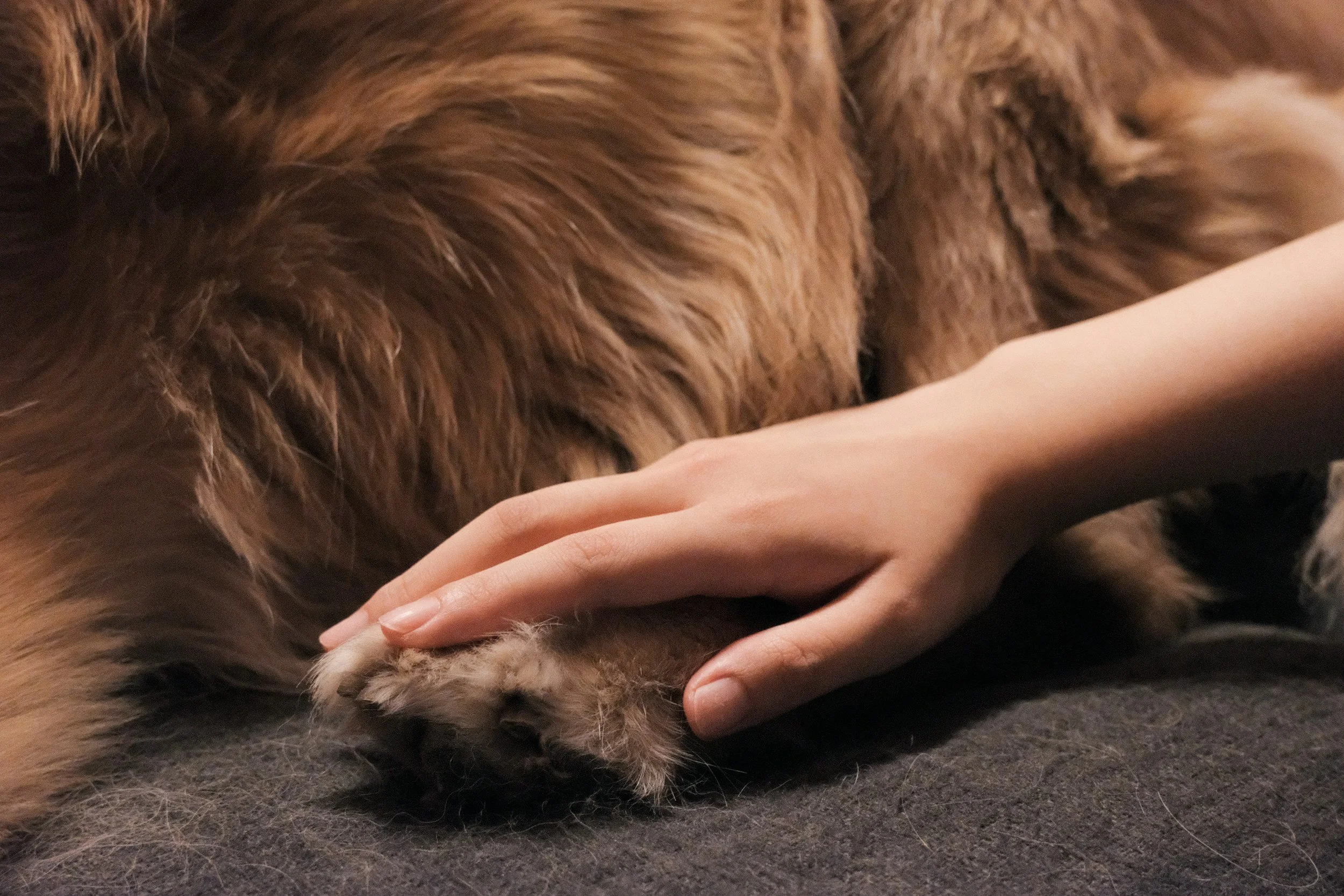
Fear, restraint, and the mystery behind one of grooming’s most common struggles.
Picture this: You own a dog, and you know that he hates having his nails done. Any time you take him to the groomer, it’s a toss-up whether the nails will get clipped at all. You regularly expect difficulty, anxiety (for both you and your dog) and perhaps you've found yourself wondering why something as seemingly simple as a nail trim has become such an ordeal. You know your dog is “bad for nails,” but what does that actually translate to?
Now, picture the other side of the interaction. You’re the groomer, and a new client is booked for a nail trim. Before you even meet the dog, you're warned: “He HATES having his nails done.” Immediately, Pandora’s box opens in my head. What does “hate” look like for this particular dog? Is he going to pull his paws away? Thrash? Bite? Bark? Urinate in fear? Is he going to desperately try to escape? Or will he surprise me with something entirely different- complete, fearful stillness? Well, truthfully, “bad for nails” tells me very little about why an animal struggles. And the why is where I want to begin.
Meeting the Dog Before Meeting the Behavior
Recently, I met a new client who warned me before I even approached her dog that he hated having his nails done. That information is valuable as I always want to know an animal’s history, but it also opens the door to more questions.Is he young or old? If he’s a senior, does he experience arthritis or joint pain? Has he had a frightening experience during a previous nail trim? Has he been quicked before? Does he dislike having his feet handled in everyday life? Is this something he has struggled with since puppyhood? Or could there be something entirely different happening? Regardless of the answer, I begin with the same standard of care: meet the animal in front of me before deciding what that animal needs from me.
During house-call nail trims, I intentionally arrive with very little. Often, it's simply my nail tools in hand. I calmly introduce myself to the owner and their dog and give the dog an opportunity to sniff me out for as long as they’d like. I allow them to investigate my nail clippers or Dremel before I begin. This simple introduction does not take a long time, sometimes it takes as little as thirty seconds. It’s fast, but intentional.
When we're ready to begin, I will typically start with the hind legs, with the dog's head facing away from me. More often than not, I'll ask the owner to help gently support their pet. We may begin with an arm underneath the belly and another supporting the front of the body while the owner provides the familiar touch and reassurance their dog knows best. Then, before I've even trimmed a nail, I'm watching.
The Reaction Has a Beginning
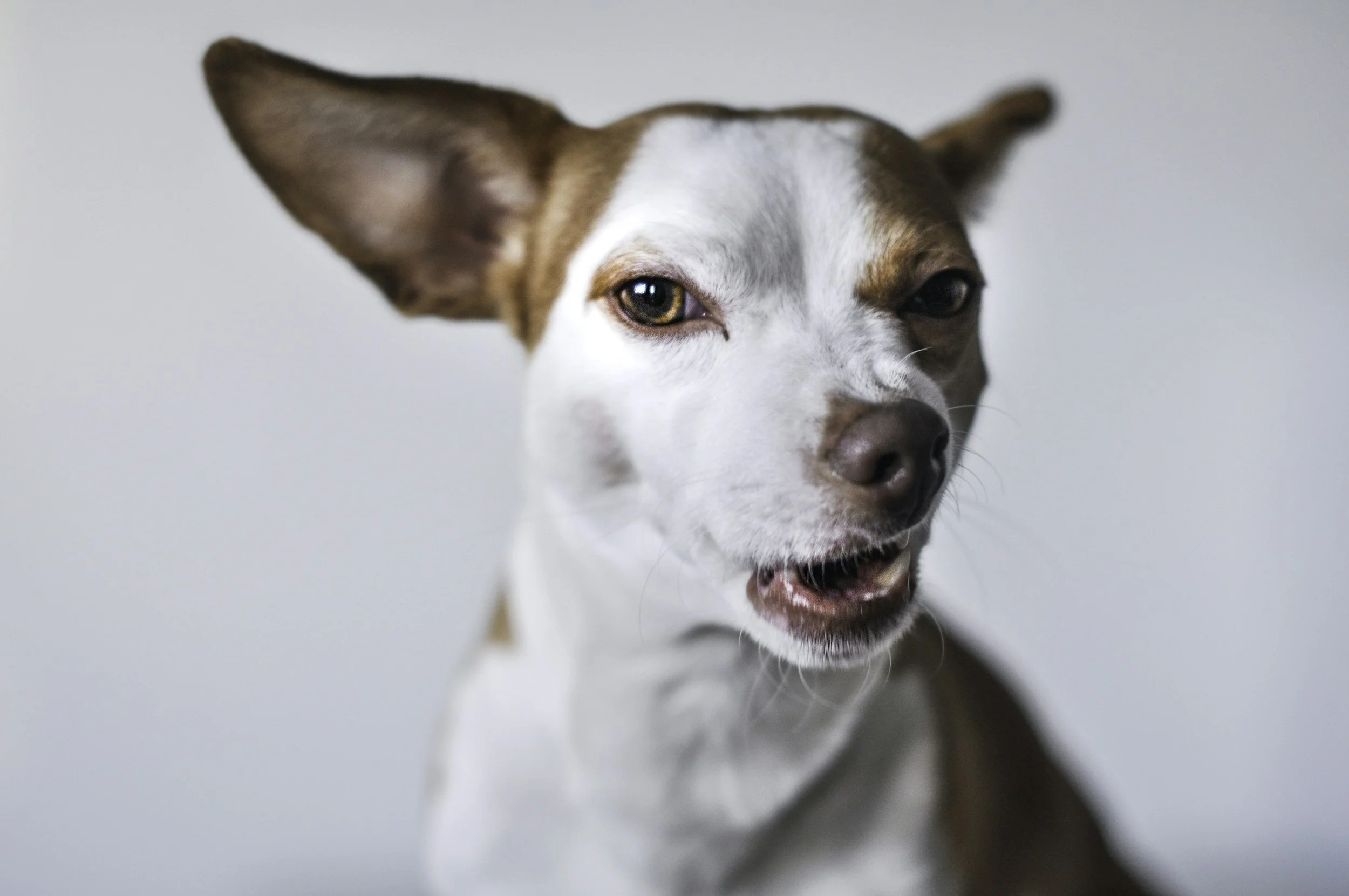
“Since animals do communicate to us during grooming (i.e., movement of their eyes, ears, mouths, tails, posture, breathing, movement, tension, avoidance, and reactions to our touch.) When we handle an animal, we ask a question with our hands, and in turn their body gives us the answer. We adjust, and they answer again. That exchange continues throughout the service.”
As I slowly approach a paw, I gauge the dog's micro-movements. Does the tail tuck? Do the ears change position? Does the mouth suddenly close? Does the body become rigid? Does the dog immediately turn their head toward my hand? Do they try to sit down when I lift a hind leg? Do they pull the paw away when I touch it, or only when I manipulate an individual toe? Does the reaction begin when the clipper appears, when it opens, or when it touches the nail? What changes when the Dremel turns on? All of this is communication, and it continues throughout the entire service.
With my new client, something wonderful happened: the notoriously nail-averse Aussie his owner had warned me about stood beautifully for his nail trim. His owner was genuinely surprised. As I became more confident that he wasn't going to react negatively, I was able to have her decrease some of the physical support she was providing. He continued to do wonderfully! A few minutes later, I was packing up to leave when I heard her husband from inside the house: “Done already? That was really fast.” Yes, indeed!
His history mattered, but his history did not determine what I assumed he would do that day.
What If the Nails Aren’t Actually the Problem?
Nail trims are one of the most common services I hear pet owners describe as difficult. “My dog hates his feet touched.” “She’s horrible for nails.” “He needs to be held down.” “He tries to bite.” Those statements describe what we see, but they don't necessarily explain what the animal is experiencing.
Consider how many completely different problems can exist underneath the same sentence: “My dog is bad for nails.” Is it the sound of the nail clippers opening? The vibration of a dremel against the nail? The manipulation of individual toes? The sensation of having a paw held? The position in which the leg is being lifted? Could arthritis or another source of pain make that position uncomfortable? Was the dog previously quicked during a nail trim and now anticipates pain? Is the dog frightened by the tool itself? Or is the dog frightened by what happens when they attempt to move away from it?
There may be times when we cannot identify the exact source of a dog's reaction. Animals cannot verbally tell us what happened during a previous experience or exactly which sensation makes them uncomfortable, but that doesn't mean we stop asking the question.
Restraint Is a Tool, Not an Automatic Answer
Restraint has an important place in grooming. Appropriate restraint can protect the animal, the groomer, and everyone involved. Depending on the dog and the circumstances, additional support, grooming loops, a groomer’s helper, an Elizabethan collar, a properly used basket muzzle, or another safety measure may be appropriate. My challenge is not against the existence of restraints, rather it’s against restraint becoming the automatic starting point before we've asked whether this individual animal requires it.
For an already anxious or fearful dog, increasing physical restriction can sometimes intensify the very behavior we're attempting to control. A dog pulls their foot away, so we hold tighter. The dog pulls harder, so we increase restraint. The dog begins to panic, and we conclude, “Wow. This dog is terrible for nails,” and with this we ask, “what have we actually learned?”
Perhaps the nail trim itself is frightening. Or perhaps we've discovered that this particular dog experiences being physically restrained as frightening. Those are not necessarily the same problem, and they should not automatically receive the same response.
From “How Do I Stop This?” to “Why Is This Happening?”
As groomers, we are often required to think quickly. We work with sharp tools, unpredictable movement, animals of different sizes and temperaments, and procedures that must be completed safely. But I believe there is tremendous value in changing the first question we ask when an animal reacts. Instead of immediately asking, “How do I stop this dog from reacting?” what happens if we first ask, “What is causing this dog to react?”
From there, we can begin assessing each element of the service individually: touch, position, pressure, sound, vibration, environment, restraint, previous experience, pain, and trust. We may not find a perfect answer, but becoming curious about behavior gives us something that simply overpowering behavior cannot: information, which allows us to adapt.
Redefining Success
I’ve often wondered if the question that needs reevaluating isn't “Why is this dog so bad for nails?” at all, instead it’s, “What can I provide to create an emotionally safe environment for this animal while accomplishing what needs to be done?” Emotional safety does not mean promising an animal that they will never experience discomfort. Grooming can require animals to tolerate sensations and handling they would not choose on their own. Nail trims are necessary care, and sometimes we do have to ask an animal to work through a degree of uncertainty.
Emotional safety means remaining attentive to what the animal communicates when that discomfort occurs, and understanding that stillness does not automatically equal comfort. Recognizing that resistance is information before we label it misbehavior also means using an animal’s body language to guide our next decision, rather than expecting every animal to respond to the same approach.
Since animals do communicate to us during grooming (i.e., movement of their eyes, ears, mouths, tails, posture, breathing, movement, tension, avoidance, and reactions to our touch.) When we handle an animal, we ask a question with our hands, and in turn their body gives us the answer. We adjust, and they answer again. That exchange continues throughout the service.
Good handling, to me, is not simply achieving the absence of resistance, rather it is learning how to participate in that conversation. Sometimes the conversation tells us to continue while others can signal to change our approach, telling us we may need additional safety measures. The best part? Sometimes (wonderfully) it ends with four freshly trimmed paws, a completely surprised owner, and someone calling from the other room: “Done already?”
Yes, sometimes it really can be that simple, and not because the dog was forced to stop being “bad,” rather because we took the time to find out who they were before deciding how they needed to be handled.